The Weight of a Name, The Freedom of a Legacy: John Carter Cash Finds His Own Voice
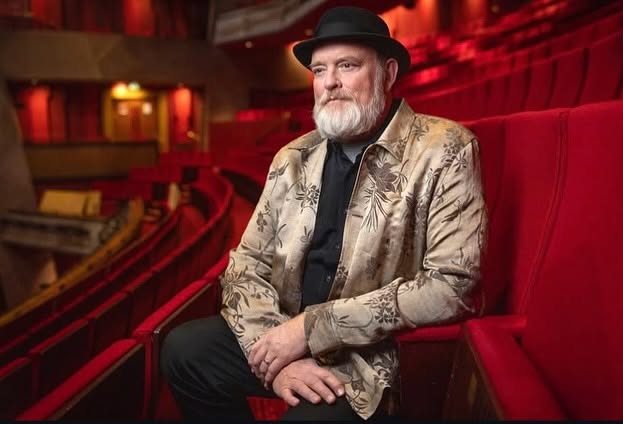
For most people, the name Cash carries the weight of American music history. For John Carter Cash, it has carried something far more personal. It is the echo of childhood memories, the responsibility of preserving an unmatched legacy, and ultimately, the freedom to create one of his own.
During an honest and often hilarious conversation with Don, Dean Baldwin, and Tina on Press Play Radio Conversations, John Carter Cash revealed himself not simply as the son of Johnny Cash and June Carter Cash, but as an artist who has spent decades discovering that authenticity is worth far more than expectation.
That authenticity surfaced immediately. Before anyone expected profound reflections on music history, the conversation wandered into cigarettes, vaping, nicotine, and the strange ways life changes over time. Cash laughed about the old days when airplanes were filled with smoke and nobody questioned it. It was a reminder that even someone born into one of America's most iconic families enjoys conversations that sound exactly like friends gathered around a kitchen table.
When the discussion turned toward touring with his father, another side of Cash emerged. From the age of thirteen until Johnny Cash retired in 1998, he traveled the world performing nearly one hundred shows a year. While audiences saw a father and son sharing the stage, John simply remembers it as work. Wonderful work, certainly, but work all the same. His father encouraged him to perform his own material, planting an early lesson that would define his career. Legacy should never become a cage.
That philosophy became even more evident when Dean asked the question many children of famous parents quietly wrestle with.
Did he ever feel the pressure of living up to Johnny Cash?
His answer was remarkably honest. Of course he did.
Every second generation carries that burden in one form or another. Every child inevitably measures themselves against those who came before them. Yet somewhere along the road, that pressure faded. Today, he creates because he loves creating. Fame no longer drives him. Curiosity does.
That curiosity has produced one of the most respected producing careers in modern American music. While many know him as Johnny Cash's son, artists know him as the producer behind celebrated recordings from Loretta Lynn and countless others. Among his proudest achievements remains Forever Words, a remarkable project that transformed unfinished Johnny Cash lyrics into songs performed by some of music's greatest voices. It was not simply an album. It became a bridge across generations, allowing one artist's words to find entirely new life.
Yet despite producing legends, Cash rarely speaks about awards or accolades.
Instead, he talks about moments.
He recalls Chris Kristofferson not as an icon but as a gentle, energetic friend whose laughter filled every room. He remembers working alongside Loretta Lynn with genuine affection, describing her as family more than collaborator. Even the legendary Highwaymen become stories about friendship rather than mythology.
Perhaps the interview's most surprising revelation arrived when Tina asked about the very first album he ever purchased.
Without hesitation, Cash smiled.
Metallica's Ride the Lightning.
For anyone expecting classic country, the answer landed like a thunderbolt.
His teenage soundtrack was Motorhead, Black Sabbath, AC DC, Iron Maiden, and eventually Soundgarden. Chris Cornell became one of his greatest musical influences, ultimately leading to a friendship and the privilege of producing one of Cornell's final recordings. In a single answer, John Carter Cash shattered every stereotype anyone might have built around his famous last name.
That willingness to embrace unexpected influences also explains his newest project, Pineapple John.
Part folk journey, part spiritual meditation, part Jamaican daydream, the record refuses to fit comfortably inside any single genre. Born during the isolation of the pandemic, the album became less of a recording project and more of a healing experience. Songs arrived quickly, almost unexpectedly, before Cash carefully searched for other pieces that belonged within the story he was telling.
His cover of The Ballad of Spider John became one of those pieces.
Ironically, he had no idea Jimmy Buffett had famously recorded the song until after releasing his own version. His inspiration came directly from songwriter Willis Alan Ramsey, whose original interpretation had captivated him since his twenties.
Even Pineapple John's unmistakable Jamaican flavor comes honestly. Cash spent much of his childhood in Jamaica, where Johnny and June maintained a home. Those years left permanent fingerprints on his musical identity, making reggae rhythms feel less like experimentation and more like homecoming.
The conversation became even more revealing during Press Play's signature Song Story Game.
Asked what music reminds him of his parents, Cash did not name Johnny Cash records.
Instead, he chose the original Carter Family for his mother and the timeless gospel recordings his father cherished above everything else. Johnny Cash, he explained, listened less to famous artists than to the church songs that shaped his childhood.
It was another reminder that behind every legend is simply someone shaped by the music they first loved.
Asked which artists continue to inspire him today, his answers ranged from Bruce Springsteen to Leon Russell, Doctor John, Glenn Campbell, Jimmy Rodgers, the Carter Family, his father, and, with a grin that delighted everyone in the room, Lemmy Kilmister of Motorhead.
Only John Carter Cash could place Mother Maybelle Carter and Lemmy in the same sentence without anyone questioning it. Somehow, it made perfect sense.
The interview also drifted toward Hollywood.
As executive producer of Walk the Line, Cash occupied a unique position. His parents had initiated the project before their passing, leaving him to protect their story. He explained that his responsibility was less about deciding what belonged in the film and more about ensuring what did not.
His admiration for Joaquin Phoenix was unmistakable. Despite public perceptions, Cash described him as deeply committed to his craft, even revealing one remarkable fact that perfectly captures Phoenix's artistic mindset.
He has never watched one of his own films.
Toward the end of the conversation, Don asked perhaps the most meaningful question of the afternoon.
What lesson from June Carter Cash still guides him today?
His answer was simple.
Keep going.
Press on.
Face adversity.
Continue moving forward.
He explained that his mother did not merely teach perseverance. She demonstrated it every day of her life. Watching her became the lesson.
Perhaps that is the greatest revelation about John Carter Cash.
He inherited more than songs.
He inherited resilience.
He inherited faith.
He inherited curiosity.
Most importantly, he inherited permission to become something entirely his own.
In an era obsessed with celebrity lineage and inherited fame, John Carter Cash offers something refreshingly rare. He understands the value of history without becoming imprisoned by it. He honors the past while constantly searching for the next creative adventure, whether that leads him into abstract painting, traditional country, Jamaican rhythms, heavy metal influences, or songs that refuse to fit inside neat categories.
By the end of the conversation, one truth became impossible to ignore.
Johnny Cash's son never needed to become another Johnny Cash.
He became something much more interesting.
He became John Carter Cash.
To learn more about John Cater Cash and watch his full interview: https://mosaic.pressplay.me/profiles/john-carter-cash/v7