The Last Great Music Romantic: Why Courtney Taylor Taylor Still Believes Art Matters
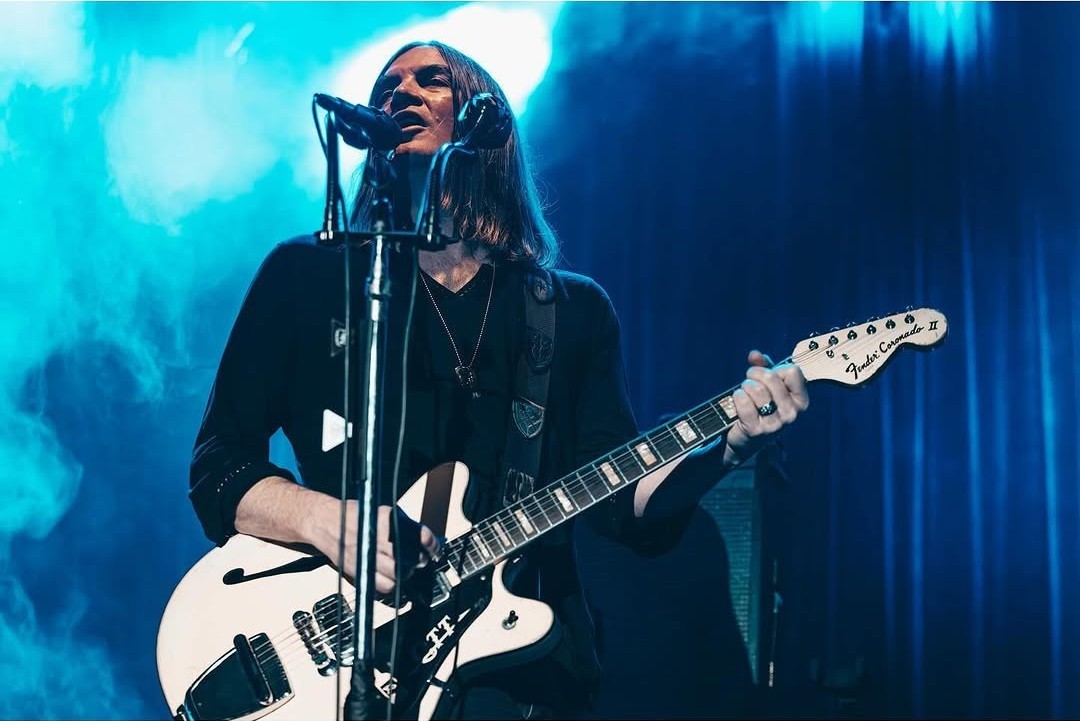
There was never going to be a predictable conversation with Courtney Taylor Taylor. The frontman of The Dandy Warhols has spent his career challenging expectations, so it makes perfect sense that an interview about a covers album quickly became a passionate discussion about MTV, FM radio, Devo, Bauhaus, artificial intelligence, vinyl records with a silent fourth side, and why the greatest revolutions in music always begin with artists refusing to follow the rules.
For Taylor Taylor, music has never simply been entertainment. It is culture, rebellion, architecture, cinema, and history colliding at exactly the right moment.
Looking back on the nineteen eighties and nineties, he speaks with genuine admiration for an era when discovery still felt magical. MTV was not simply a television channel. It was an artistic movement. Programs like 120 Minutes gave unconventional bands a global audience, while magazines such as College Music Journal introduced listeners to artists months before commercial radio ever caught on. Those platforms helped transform outsiders into headliners.
He believes that period allowed creativity to flourish before corporations fully understood what they had. Fringe artists became household names because they were given room to exist without being polished into something safer. Videos were treated as art instead of marketing. Independent voices were amplified instead of filtered.
That freedom, in his view, has largely disappeared.
Today's music landscape feels less like a shared experience and more like an endless stream of disconnected content. Without a central place for listeners to gather around new music, songs scatter into what he describes as a confetti cannon of endless choices. While technology has made music more accessible than ever, he questions whether it has made artistic discovery any easier.
Taylor Taylor does not hide his frustration with an industry that increasingly rewards mass entertainment over individual expression. He sees pop culture becoming more narrowly targeted, particularly toward younger audiences, while leaving less room for artists who want to challenge listeners rather than simply satisfy algorithms.
Yet despite his criticism, he remains endlessly curious.
That curiosity is perhaps most obvious on PinUps, The Dandy Warhols' ambitious collection of cover songs. Rather than simply recreating familiar tracks, the band approaches each selection as an opportunity to inhabit another artist's world while still revealing their own personality.
Among the songs closest to his heart is The Damned's "Love Song," a performance he openly describes as the finest vocal work of his career. Instead of reinventing Dave Vanian's original delivery, Taylor Taylor deliberately embraced it, allowing admiration rather than ego to shape the performance. His affection for The Damned is unmistakable, tracing back to discovering Phantasmagoria before diving into Machine Gun Etiquette, an album he still considers one of the greatest collections of songs ever assembled.
Elsewhere, his unexpected interpretation of America's "Sister Golden Hair" reflects the emotional connection many listeners of his generation still carry for the music that filled childhood summers. Even songs that might never earn indie credibility hold undeniable memories, and Taylor Taylor refuses to apologize for embracing them.
His appreciation for music extends far beyond individual songs. He speaks passionately about artists who completely redefined what a band could be. Devo and Bauhaus remain towering influences, not simply because of their sound, but because of the philosophies behind their names and their willingness to dismantle pop music before rebuilding it into something entirely new.
That fascination with creative reinvention now extends into another frontier.
Unlike many musicians who dismiss artificial intelligence outright, Taylor Taylor approaches it with cautious optimism. He sees remarkable creative possibilities while openly acknowledging its limitations. He has spent years working in AI filmmaking, using the technology to create a feature set during the birth of electronic music in nineteen seventies Germany. The process, he says, is anything but effortless. It demands patience, persistence, and countless hours of frustrating work.
For him, AI is not replacing creativity. It is simply another tool that still requires an artist's vision to produce meaningful work. While he worries about automated music becoming formulaic, he also sees opportunities to reinterpret his own catalog in ways that would have been impossible only a few years ago.
Even discussing technology, his perspective always circles back to one central idea.
Art matters because people matter.
That philosophy carries into his life as a father. He proudly describes his teenage son as someone who values Leonard Cohen, David Bowie, Simon and Garfunkel, and Electric Light Orchestra just as much as engineering and mathematics. Rather than hoping his son follows him into music, he celebrates the fact that he wants to build systems that genuinely improve people's lives.
There is a quiet humility in that answer. For someone whose career has been built on creating art, Taylor Taylor speaks just as enthusiastically about raising a thoughtful human being.
Near the end of the conversation, one simple Song Story question unlocks one of the interview's most personal moments.
Asked what music reminds him of his first love, he immediately answers with Sweet's "Fox on the Run." Suddenly, the conversation shifts from industry analysis and artistic philosophy to the memory of a childhood crush with feathered hair and a bicycle scar. The answer is brief, honest, and unexpectedly touching.
Perhaps that is the real Courtney Taylor Taylor.
Behind decades of alternative rock credibility, outspoken opinions, and relentless artistic experimentation remains someone who still remembers exactly how a song can preserve a feeling that time never quite erases.
That is what great artists have always done. They remind us that beneath every movement, every technological revolution, and every changing trend, music still belongs to memory, emotion, and the people who refuse to stop chasing both.