Slightly Famous Somebodies Are Making Music Without Boundaries
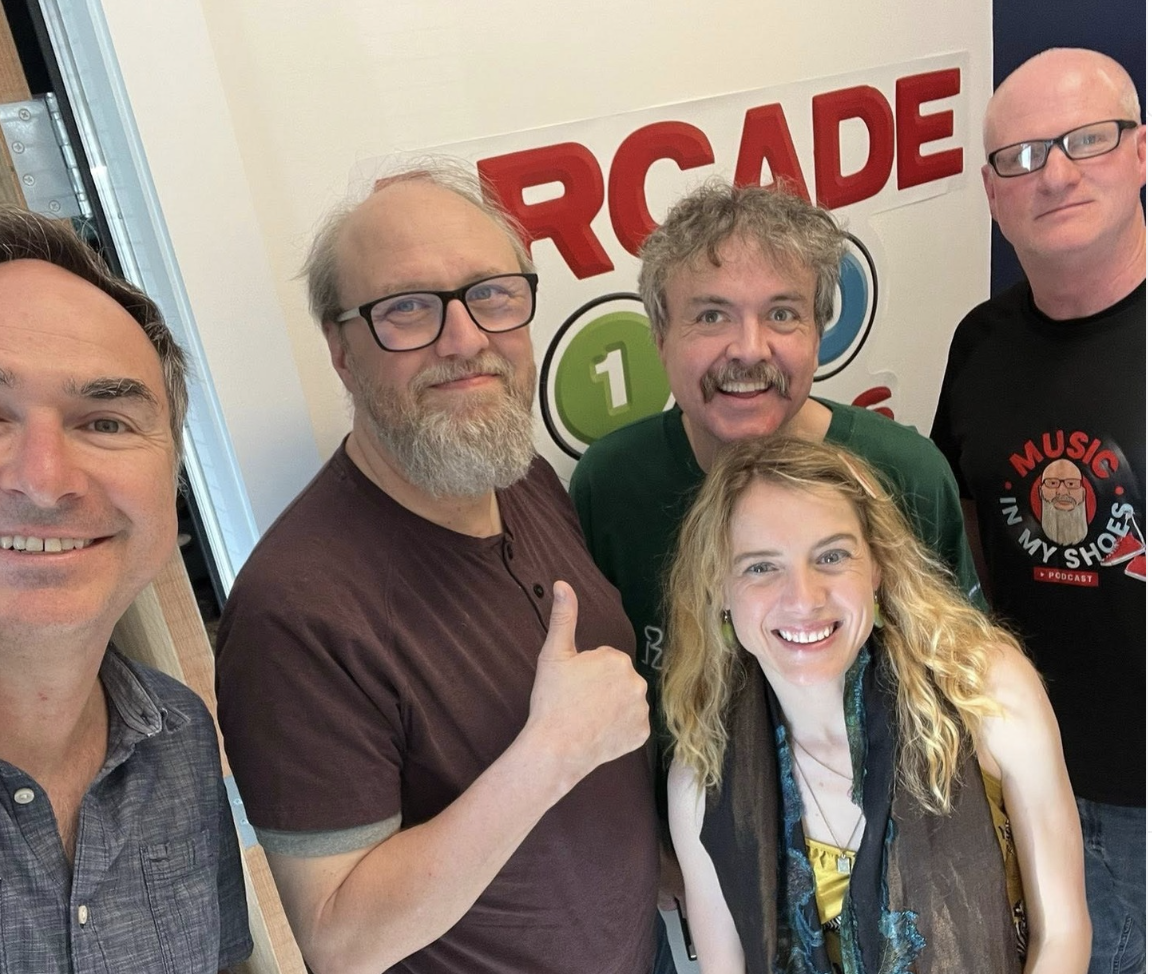
For Slightly Famous Somebodies, the name is part joke, part introduction, and a pretty good summary of the spirit behind the music. The Athens, Georgia, collective brings together musicians with different histories, influences, and musical instincts, creating songs that can move from psychedelic rock to folk, soul, progressive rock, and pop without staying in one place for too long. There is a shared affection for the classics, but the group is less interested in recreating the past than in seeing what happens when those influences collide.
The name came together almost by accident. When Jonathan Spencer and Laura Slane Wiggins began assembling musicians for a tribute honoring a beloved figure in their musical circle, they needed a name for what they initially imagined would be a one time project. Spencer had a long list of potential band names, many of them deliberately ridiculous. During a conversation about what to call the group, the idea emerged that its members were not nobodies, but they were not exactly household names either. They were slightly famous somebodies. The phrase stuck, and a temporary project began to take on a life of its own.
That evolution reflects the way the band works. Spencer, a casting director in independent film, approaches the music with a similar instinct for assembling the right people for the right part. He describes the process as building a collection of core ingredients and then bringing in different musicians depending on the style and needs of each song. Laura contributes vocals and songwriting, while guitarist Vaylor Trucks brings his own musical perspective and connection to the Allman Brothers legacy. Drummer and guitarist Kane completes what the group calls its core four, although the wider circle of collaborators continues to grow.
The result is a band that treats genre less like a boundary than a starting point. Athens has long offered musicians the opportunity to see local acts up close, often on any given night of the week, and that environment helped shape the group's members in different ways. Wiggins grew up with classic rock, including Led Zeppelin and The Who, while also developing a love for musical theater. Her tastes expanded into alternative music and the sounds of the Athens scene. Spencer's interests range across progressive rock and psychedelic pop, including artists such as Renaissance and PM Dawn. Trucks grew up hearing jazz and classical music alongside folk and soul, with artists such as Herbie Hancock, John Coltrane, Aretha Franklin, Stevie Wonder, and Al Green forming part of his musical landscape. Kane's background brings in the Grateful Dead, the Allman Brothers, James Brown, Motown, and Jimi Hendrix.
Those influences do not simply sit beside one another in the band's music. They become part of the arrangement itself. During the interview, the musicians discuss slipping musical references into performances and recordings, leaving small clues for listeners who know where to look. A passage might nod toward Pink Floyd, while a bass line carries the spirit of Led Zeppelin or another familiar influence. The band treats these references as a kind of conversation between musicians, a way of acknowledging the records and performers that shaped them while still moving toward something of their own.
The song “Forty Five” offers a glimpse of that approach. The recording brings together multiple musicians and contrasting parts, with organ, percussion, and lead guitar adding to its loose, expansive feel. The band points out its references to artists and sounds that have traveled through the members' musical lives, but the song does not come across as a checklist of influences. It feels more like a gathering of people who know the same musical language and enjoy finding new ways to speak it. There is room for precision, but there is also room for the unexpected turn, the passing idea, and the moment when everyone follows the groove somewhere new.
That sense of possibility becomes even more pronounced in “Walking Suite,” a larger composition that grew out of Kane's earlier “Walking Song,” written with William Tonks. What began as an instrumental was taken up by Wiggins and Spencer and developed into something more expansive. The piece moves through shifting scenes and moods, bringing together rock, theatrical elements, and a cinematic sense of movement. It is less a song that stays in one place than a journey that continually changes its surroundings.
The band's interest in imagining music visually is especially clear in “Tugboat,” a piece connected to the larger suite. Spencer and producing partner Chris Byron pay close attention to how sounds occupy space, building an arrangement that invites listeners to hear instruments and effects moving around them. The sound of a tugboat becomes part of the atmosphere, alongside a brass like passage created with a modest keyboard and carefully shaped production. Pink Floyd is an acknowledged reference point, but the aim is not merely to imitate its sound. The production gives the song a landscape of its own, with textures that drift, recede, and return. For the group, the studio is another instrument, a place where the music can become larger than the sum of the parts.
The story behind “Walking Suite” also reveals something important about the community supporting the band. Kane's original “Walking Song” appeared on “Rhythm of the Steeple People,” a project connected to Athens musicians and created to benefit Project Safe, which supports people experiencing domestic violence. Proceeds from the related concert and album went to the organization. The song's later transformation into part of the band's own work created another connection between musicians, recordings, and a cause that mattered to the people involved. In Athens, these relationships are part of the musical ecosystem, and Slightly Famous Somebodies seem to thrive on the way one collaboration leads to another.
The band is also developing “Let It Go,” a rock opera that reflects its taste for big ideas, shifting scenes, and a little absurdity. In the interview, the concept centers on a young person navigating the rules and expectations imposed by a camp environment, with the possibility of strange characters and changes in time adding to the story. It is still evolving, but its ambitions are characteristic of a group that is comfortable letting a song become an entire world. The members can discuss serious musical construction and then turn immediately toward a joke, a bizarre title, or an unexpected image. That humor is not separate from the work. It is part of the freedom that allows the work to keep changing.
For a band called Slightly Famous Somebodies, collaboration may be the most revealing part of the name. The collective draws energy from musicians who have played in other projects, from friendships formed over decades, and from a local scene where creative connections rarely end with one performance. The members bring different backgrounds to the same room, but they share a willingness to follow an idea wherever it leads. Their music can be intricate without taking itself too seriously, expansive without losing its sense of melody, and full of references without becoming trapped by nostalgia.
The joke in the name is that nobody needs to be a superstar to make something memorable. The more serious truth is that music often becomes more interesting when talented people make room for one another. Slightly Famous Somebodies are building their sound on exactly that principle, one unlikely combination, one musical Easter egg, and one new collaboration at a time.