Rick Monroe & The Hitmen: Outlaw Country, Rock and Roll, and the Stories Behind the Music
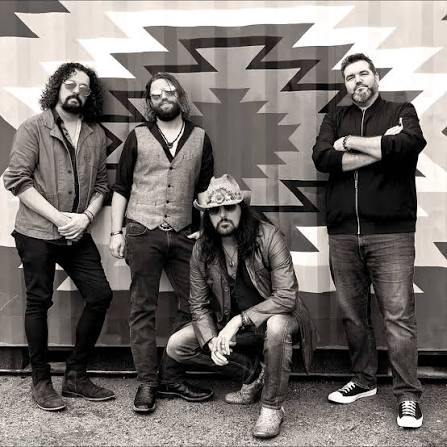
Rick Monroe has built a career around the belief that music should come from real life. Blending the storytelling traditions of country with the grit of Southern rock and the power of classic rock, Monroe and his band, The Hitmen, have developed a sound that refuses to fit neatly into one category. During a conversation on Press Play Radio Conversations with The Don, Dean Baldwin, and Tina Hauser, Monroe reflected on the band's evolution, the artists who shaped his musical identity, and the personal experiences that continue to influence his songwriting.
One of the most unexpected stories from the conversation centered on the band's version of Motörhead's “Ace of Spades.” Monroe explained that the band recorded its interpretation years ago, eventually reaching Motörhead frontman Lemmy through comedian Jim Florentine. Florentine was so enthusiastic about the recording that he wanted Lemmy to hear it. According to Monroe, Lemmy enjoyed the version and considered it one of his favorite interpretations of the song.
The cover also played an important role in the band's live history. While performing at the Cowboy Palace, a small honky tonk in California, Monroe encountered an audience member who requested a “ten step.” Monroe initially had no idea what the man meant, but drummer Bobby Jarzombek encouraged him to trust the moment. The band launched into “Ace of Spades,” and the audience went wild. Monroe said the group has continued performing the song in that style for approximately 15 years or longer. The live recording featured during the interview came from the band's living room sessions for a new live EP, capturing the performance without the atmosphere of a traditional concert setting.
Monroe's career has also taken him far beyond the usual touring circuit. During a USO tour, he was invited to participate in programming for Voice of America, where he met Judy Massa. An opportunity soon followed to perform privately for former Soviet leader Mikhail Gorbachev aboard the USS Sequoia, the historic presidential yacht. The event supported the Frank Foundation, which raised money for orphanages. Monroe recalled sharing vodka shots with Gorbachev before later traveling to Russia for three weeks of performances and fundraising events.
Those experiences eventually led Monroe to Vietnam, where he sang the American national anthem for John McCain and Pete Peterson. It was the first time he had performed the song, and he remembered feeling the pressure of the occasion, particularly after learning that it had not been sung there since the war. For a period of his career, Monroe found himself involved in musical diplomacy, using his performances to connect with people in places and circumstances he had never imagined.
Although Monroe spent many years performing as a solo artist, The Hitmen began to take shape during the COVID pandemic. The band was touring on the West Coast when shows started getting canceled and the musicians were forced to return home. Having already spent months together on the road, they decided to stay together and begin writing. Live streaming soon became an important outlet, with the band's performances reaching large audiences. Monroe recalled that their sound engineer developed an approach to live streaming audio that attracted attention from major record labels. The group also appeared on a stream hosted by comedian Ron White, creating another unexpected opportunity during a period when live music had largely come to a standstill.
As the musicians continued writing and recording, the group gradually became a permanent band rather than a collection of players supporting Monroe's solo career. Their album “Six Gun Soul” marked an important stage in that transition. Monroe explained that by the time the band entered the studio, the musicians had established themselves as the right group to bring the music to life. Several years later, The Hitmen had developed into a band with its own identity, collaborative songwriting process, and increasingly distinctive sound.
That identity is particularly evident in the group's more emotional material. During the interview, The Don played a song Monroe released in 2021, praising its powerful chorus and the intensity of his vocal performance. Monroe revealed that he had recently been diagnosed with cancer and that the song had taken on a deeper meaning in light of his circumstances. His niece appears in the accompanying video, and he explained that he and a friend had written the song roughly a decade earlier, long before he knew how personally relevant its message would become.
Rather than separating his personal struggles from his work, Monroe views those experiences as part of his responsibility as an artist. He explained that musicians draw from their own lives and the lives of others to create something listeners can connect with. If he cannot turn pain into art, he questioned, what is the purpose of making music? The song's demanding vocal arrangement was intentional as well. Producer Malcolm Springer encouraged Monroe to push his voice into an uncomfortable range, allowing the performance to reflect the emotional strain at the heart of the song. Monroe believes that tension helped communicate the feeling he wanted listeners to experience.
The band's softer side came through in “Our Love,” another track featured during the conversation. The Don compared Monroe's vocal style to Glenn Frey of the Eagles, a comparison Monroe described as one of the greatest compliments he could receive. He explained that the band grew up listening to classic rock, including the Eagles and REO Speedwagon, and that those influences have become increasingly apparent in its newer material. Southern rock groups such as Lynyrd Skynyrd and 38 Special have also played an important role in shaping the band's musical direction.
For Monroe, the appeal of classic rock lies in the combination of strong guitar work, memorable melodies, and songs that create an emotional connection. He believes that modern country has increasingly moved toward pop production, leaving fewer outlets for contemporary bands that carry forward the traditions of classic rock and Southern rock. While he sees plenty of artists drawing inspiration from the style, he also feels that the industry does not always provide those musicians with a natural place to fit.
He is equally concerned about the role technology is playing in songwriting. Monroe spoke critically about the growing use of artificial intelligence in music creation, arguing that the emotional storytelling traditionally associated with country music can get lost amid formulaic production and heavily programmed arrangements. For him, the strongest songs are those that communicate recognizable human experiences, whether through a lyric, a vocal performance, or a guitar part that makes a listener stop and pay attention.
The band's own music continues to evolve. Monroe discussed “Trouble,” the first song he wrote with bassist Alan Beeler. The two initially disliked the finished track but continued revisiting it until they found the version that worked. That willingness to keep experimenting has become part of the band's creative process. Monroe also described a newer song called “Suede,” inspired by the film “Almost Famous.” After watching the movie together, the musicians began taking notes and developing lyrics drawn from its world of music, touring, and the complicated relationships that develop on the road.
The conversation also offered a glimpse into Monroe's musical influences beyond country and Southern rock. When asked about the first music he purchased with his own money, he recalled buying an album by Queensrÿche, likely “The Warning.” He shared a story about opening for the band at a festival and being surprised when its members recognized The Hitmen's music and asked for an autograph. For someone who had arrived as a fan, the experience was a reminder of how far his own career had come.
Monroe also spoke about the spiritual power of music, pointing to “Firm Foundation (He Won't)” as a song that has resonated with him recently. He recalled an especially meaningful Elvis Costello concert he attended with his brother at Long Beach Arena, describing the impact of Costello's voice and the moments when the band dropped away, leaving the singer alone. More recently, he has revisited the catalog of April Wine, rediscovering music he had not listened to in years. These influences reflect the breadth of his musical interests and his appreciation for artists who can make a performance feel personal.
Despite the serious challenges he is facing, Monroe remains focused on creating music and maintaining his sense of humor. He shared that the band's next album, “Southern Teabags,” still has several songs awaiting release, while its live EP includes approximately six to eight tracks, including “Ace of Spades.” The band has also been preparing additional songs for recording. Although Monroe acknowledged that his cancer diagnosis and its effects on his throat could make the coming months unpredictable, he expressed hope that he could continue working and eventually return to the road.
He also spoke with gratitude about the support he has received from friends, fans, and people praying for him around the world. His message was straightforward: reach out to the people in your life, even when nothing appears to be wrong. You never know what someone may be going through, and a simple expression of support can mean more than you realize.
Throughout the interview, Monroe demonstrated the same qualities that run through The Hitmen's music: humor, honesty, resilience, and a willingness to embrace the unexpected. Whether reworking a heavy metal classic for a honky tonk crowd, performing for international audiences, or turning difficult personal experiences into songs, he continues to approach music as a reflection of life itself. For Rick Monroe & The Hitmen, the road ahead may hold challenges, but the commitment to making music, pushing creative boundaries, and keeping rock and roll alive remains firmly in place.