Phil Lewis Never Chased Nostalgia. He Outran It.
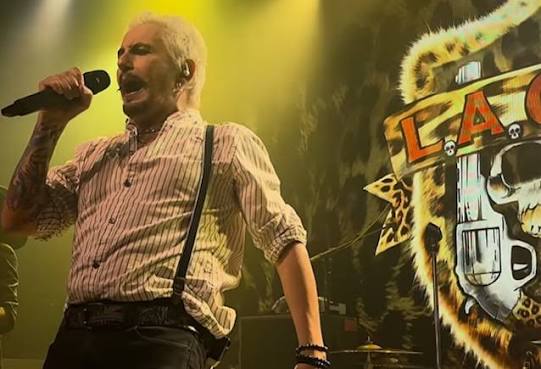
There are rock stars who spend their careers trying to preserve the past, and then there are artists like Phil Lewis, who have learned that the only way to stay relevant is to keep moving. During his conversation with Don and Tina on Press Play Conversations, the legendary L.A. Guns frontman proved that the fire which fueled the Sunset Strip explosion still burns brightly. It simply burns a little wiser now.
Lewis speaks with the confidence of someone who has lived through every version of the music business. Platinum records, sold out clubs, endless tour buses, changing audiences, and decades of reinvention have given him perspective that cannot be manufactured. His stories flow effortlessly, bouncing from memories of Bon Scott and early AC/DC to heartfelt admiration for Tim Ripper Owens, whose relentless touring schedule Lewis describes with genuine respect. There is no ego in the conversation. Only appreciation for musicians who continue to put in the work.
Perhaps the biggest surprise is just how grounded Lewis remains. While many would imagine the life of a veteran rock singer to be nonstop glamour, he laughs about cleaning the tour bus, staying busy between shows, and embracing the simple routines that keep life balanced on the road. The mythology of rock and roll quickly gives way to the reality of discipline, humility, and gratitude.
When the discussion turns to the Sunset Strip, Lewis becomes reflective. He remembers a neighborhood overflowing with clubs, hungry bands, and limitless possibility. Today, much of that landscape has disappeared beneath commercial development, leaving only a handful of legendary landmarks standing as reminders of what once was. Yet he refuses to dwell in bitterness. The Whisky a Go Go and the Rainbow remain sacred ground, places where the ghosts of Alice Cooper, Keith Moon, Harry Nilsson, and countless others still seem to linger. Those venues are more than buildings. They are living museums for a generation that changed rock forever.
That sense of perspective extends to his audience as well. Lewis beams when describing crowds that now span generations, where parents who discovered L.A. Guns in the late nineteen eighties stand beside children singing every lyric to songs written decades before they were born. For him, there is no greater reward than watching an entire room united by music that has stood the test of time. It is a moment that advertising dollars could never create.
As a lifelong music fan, Lewis remains every bit as passionate as the teenager who paid two pounds to watch AC/DC with Bon Scott or Black Sabbath in their earliest days. His influences stretch from Alvin Lee and Ten Years After to Steve Marriott of Humble Pie, whose soulful voice became the gold standard Lewis chased throughout his own career. He speaks about records the way true fans always have, studying every production credit, every photograph, and every note tucked inside a gatefold album jacket. Those details shaped the artist he would become.
One of the conversation's most revealing moments comes when Lewis discusses aging in rock music. Rather than chasing the image he projected at thirty, he has embraced who he is today. His silver hair, tailored suits, and refusal to cling to outdated fashion trends represent something increasingly rare in entertainment. Authenticity. Lewis is not interested in pretending time has stood still. He would rather evolve than become a caricature of his younger self. That honesty feels refreshing in an industry often built on illusion.
The same maturity defines his approach to singing. Lewis openly admits he is a better vocalist today than during L.A. Guns' earliest albums. Years of learning proper technique, protecting his voice, and treating every performance like a professional responsibility have allowed him to maintain the power and range fans continue to celebrate. While others rely on shortcuts or lengthy breaks between performances, Lewis continues to take pride in earning every note night after night.
Even after decades on stage, he still feels butterflies before every show. He welcomes them. To him, they are proof that he still cares. Once the music begins, the stage becomes home, a place where confidence replaces nerves and decades of experience transform into effortless charisma. It is that combination of vulnerability and command that has always made Phil Lewis one of rock's most compelling frontmen.
By the end of the conversation, one truth becomes impossible to ignore. Phil Lewis is not interested in preserving a legacy through nostalgia alone. He is still building it. Every performance, every conversation, and every fan who discovers L.A. Guns for the first time adds another chapter to a story that refuses to end.
For those who grew up with the soundtrack of the Sunset Strip, and for younger fans discovering it today, Phil Lewis remains exactly what rock and roll needs. Honest, passionate, endlessly entertaining, and still proving that the fountain of youth has never been found in a bottle. It has always been found in the music.
Go beyond the music. Explore the Musical DNA of Phil Lewis and discover the songs, stories, influences, and defining moments that shaped the artist behind the music. This is where fans become insiders, connections become personal, and every discovery brings you closer to the artists you love. Click HERE to begin the journey.
Written by: Tina H - 2/24/2026