Mudville Poet, Nashville Troubadour: Elliott Booe Is Country Music’s Best Kept Secret
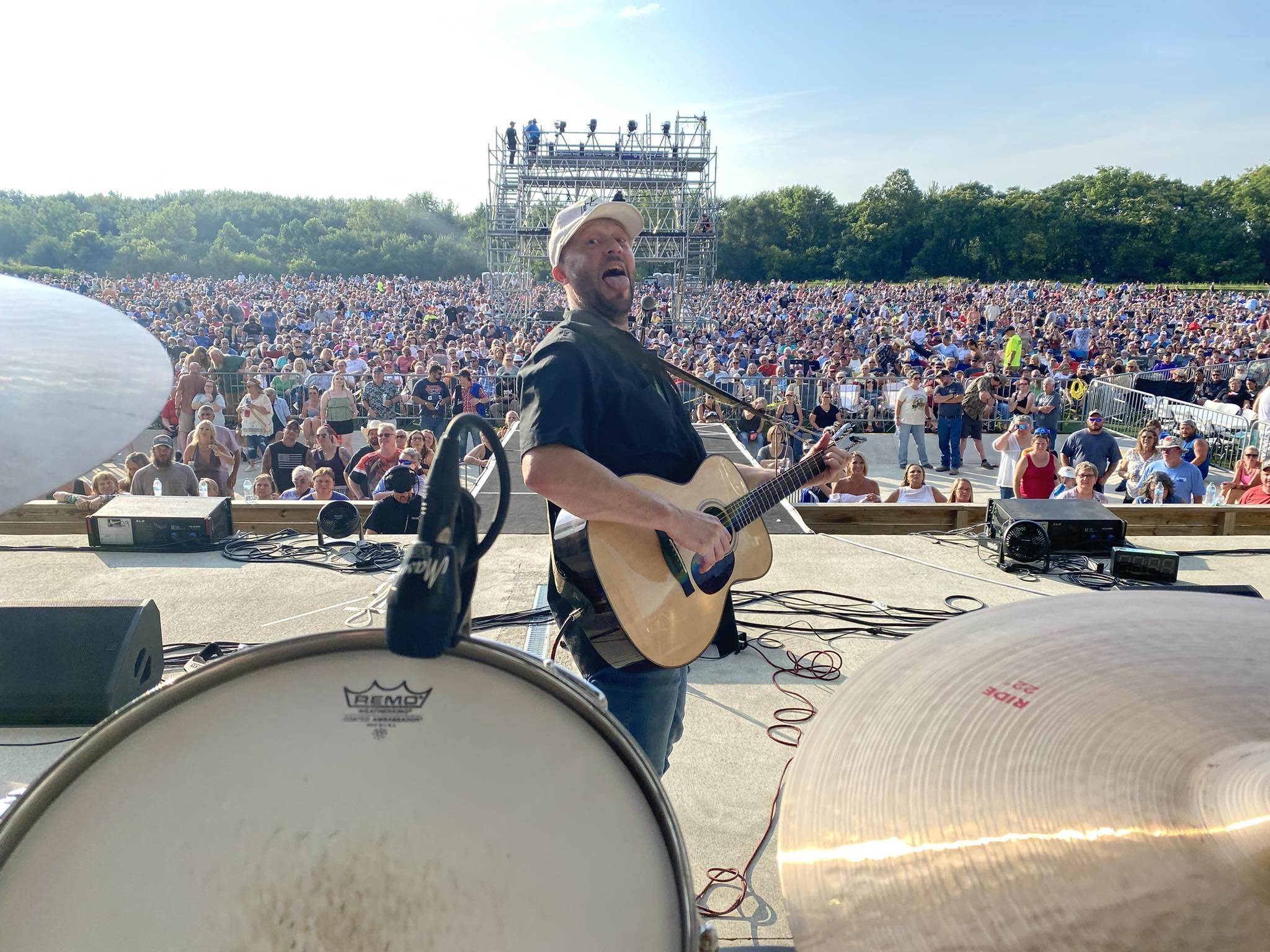
There’s something beautifully dangerous about an artist who didn’t arrive in Nashville chasing fame. No polished industry blueprint. No TikTok strategy. No manufactured heartbreak wrapped in rhinestones. Just a guy from a tiny Indiana town called “Mudville,” carrying grief, humor, stories, and a beat-up Martin guitar into a city that eats dreamers alive for breakfast.
That guy is Elliott Booe.
And somewhere between sawmills, college basketball, busted marriages, dead dogs, cancer battles, dive bars, and a thousand brutally honest journal entries disguised as songs, Booe accidentally became one of the most authentic voices creeping through modern country music.
The funniest part? He still sounds surprised about it.
During his appearance on Press Play Radio Conversations, Booe bounced effortlessly between gut-punch storytelling and laugh-out-loud comedy, often within the same sentence. One moment he’s describing waking up divorced in a Nashville Airbnb, questioning every decision he’d ever made. The next, he’s joking about his ex-wife sneezing three times while completely botching a radio promo take for five straight minutes.
That balance, heartbreak wrapped in humor is exactly what makes Elliott Booe so magnetic.
He talks like the guy sitting beside you at a bar after midnight. The one with sawdust on his boots and enough stories to accidentally change your life.
Born and raised in Clay City, Indiana, population barely scraping four digits. Booe grew up in what he proudly calls “Mudville,” a farming community that apparently spent years marketing itself as “The Mayberry of the Midwest.” The image fits. Small town. Hard workers. Long memories. The kind of place where everybody knows who skipped church and whose truck broke down at the grain elevator.
His father was the centerpiece of that world: a sawmiller, musician, songwriter, businessman, and one of those increasingly rare men Booe describes as “good at everything.”
That legacy runs deep through Elliott’s music.
You can hear it in the stunning “Song on the Radio,” a song partially started by his late father during a decade-long battle with prostate cancer. After Booe unexpectedly found himself writing music in Nashville, it reignited something in his dad too. The two began exchanging unfinished songs and ideas before his father passed away.
Then the impossible happened.
“Song on the Radio” went on to win Country Song of the Year at the Josie Music Awards.
Suddenly Booe was standing in the Opry Circle talking about his father while holding an award for a song they’d unknowingly written together across generations.
That’s the thing about Elliott Booe songs: they feel inherited.
Not manufactured. Not assembled. Inherited.
Even when they’re hilarious.
Take “First Off,” a brilliantly sharp country tune packed with lines so clever they feel stolen from an old Waylon Jennings notebook. Booe delivers one particularly savage lyric about an ex-wife leaving in a Lexus instead of a hearse. A darkly funny twist on “till death do us part” that immediately had hosts Don and Tina losing their minds during the interview.
“There’s so much humor in his songs,” Tina laughed. “I was like, this is the greatest shit ever.”
She wasn’t wrong.
Booe’s songwriting thrives in that rare space where traditional country storytelling collides with modern self-awareness. He carries the DNA of Waylon, Willie, Johnny Cash, Vern Gosdin, and Merle Haggard, but filters it through somebody who also grew up blasting Blink-182, Eminem, and Westside Connection while playing video games with his buddies after basketball practice.
That collision somehow works perfectly.
One minute he’s quoting deep-cut Waylon Jennings lyrics about “climbing a ladder that leads to a hole in the ground.” The next minute he’s talking about rap albums, naked shower concerts to Oak Ridge Boys songs, and accidentally becoming a musician at 37 because life fell apart so hard he needed somewhere to put the pain.
Country music has always belonged to storytellers.
Elliott Booe sounds like one who actually survived the stories.
There’s also something refreshingly unpolished about his rise. Booe openly admits he didn’t move to Nashville for music. In fact, he almost backed into it accidentally while trying to save a marriage before COVID detonated everything at once.
The songs became therapy first.
Career second.
That honesty bleeds into every conversation he has. Whether he’s telling stories about opening for Brantley Gilbert on his father’s birthday, describing his family’s sawmill history, or laughing through tales of chaotic festival gigs, Booe never sounds like he’s performing a personality.
He just sounds real.
And in modern country music, that’s becoming a superpower.
The most fascinating part may be how naturally Booe builds community around him. Throughout the interview, he constantly shouted out collaborators, musicians, producers, friends, and co-writers, especially guitarist and producer Max Woolery, whom Booe described as the kind of talent who’ll eventually have documentaries made about him.
That humility matters.
So does the chemistry.
Whether he’s writing songs about cat houses in Georgia (“Pink Cadillac”), working-man survival anthems like “Grab Your Boots,” or emotionally devastating family reflections like “Free Wheelin’ Pilgrim,” Booe approaches songwriting with the same mindset he learned growing up around sawmills and sports:
Show up. Do the work. Tell the truth.
That truth just happens to be wildly entertaining.
And maybe that’s why Elliott Booe feels different from so many artists fighting for attention right now. He isn’t trying to convince anyone he’s country. He isn’t dressing up authenticity in marketing language.
He’s simply living it.
Sometimes painfully.
Sometimes hilariously.
Always honestly.
And somewhere out there between Mudville and Nashville, between old-school country soul and modern-day chaos, Elliott Booe has quietly become one of the most compelling storytellers independent country music has to offer.