Lost in Hollywood Isn't Lost at All: The German Metalcore Band Turning Heartbreak Into Fire
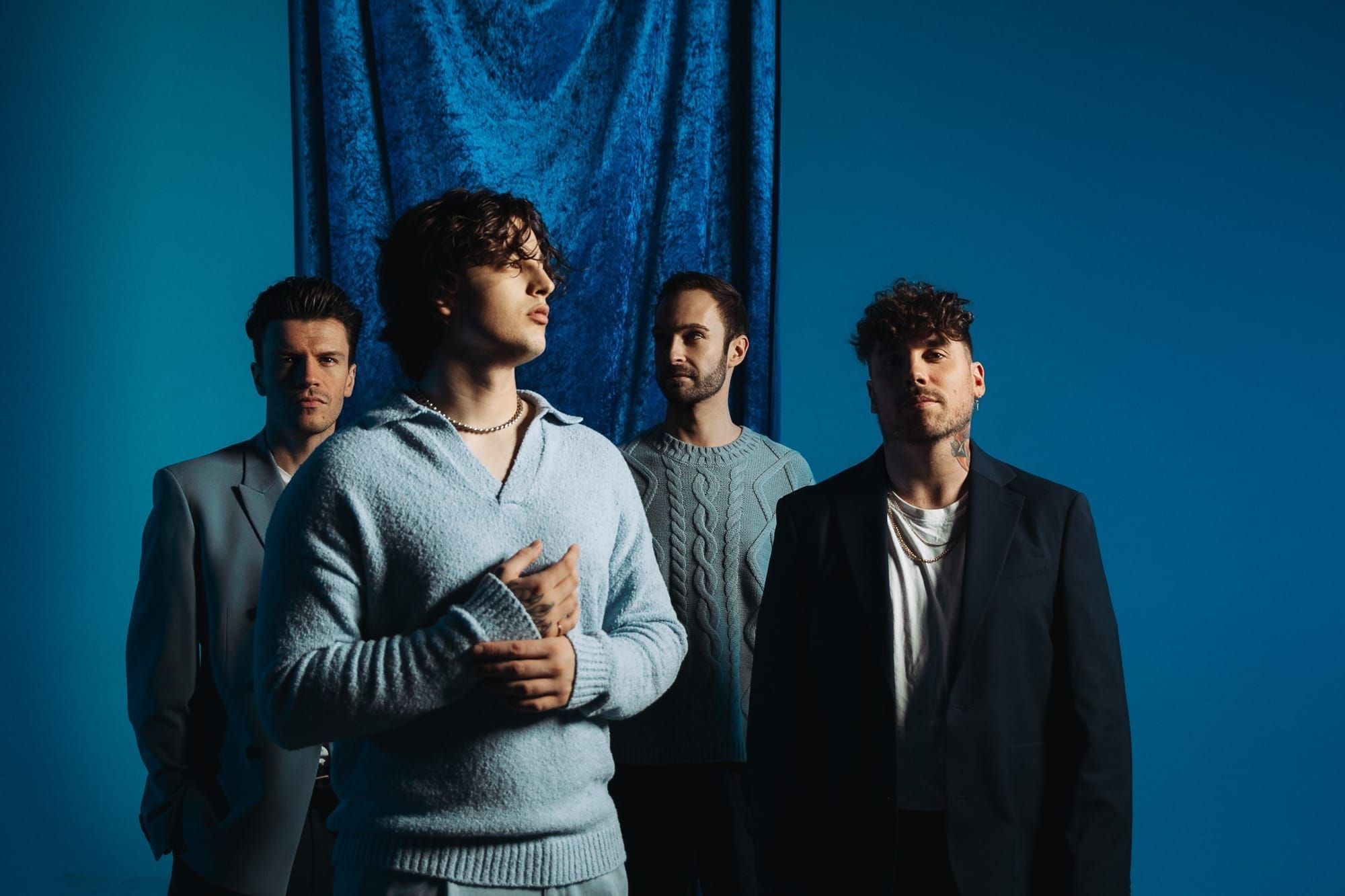
Some bands chase trends. Some bands chase algorithms. And then there are bands like Lost in Hollywood, who seem determined to chase something far more dangerous: honesty.
Speaking with Press Play Radio Conversations, frontman Amon comes across exactly the way his music sounds—passionate, thoughtful, self-aware, and completely uninterested in taking shortcuts. Whether discussing heartbreak, artificial intelligence, German techno culture, or his dream of touring America, every answer circles back to one idea: authenticity matters.
That's fitting for a band whose very name was inspired by feeling lost inside an industry built on illusion.
The Hamburg-based metalcore outfit borrowed its name from the classic System of a Down song, but Amon says the meaning runs deeper than a tribute. To him, "Lost in Hollywood" represents navigating a world that often feels fake, shiny, and manufactured while trying to remain true to yourself. It's a philosophy that has become the band's north star.
That commitment to authenticity is perhaps most obvious in their reaction to the growing flood of AI-generated music. While many artists cautiously embrace artificial intelligence as an inevitable part of the future, Amon isn't interested in replacing human emotion with machine perfection.
He talks about hearing friends unknowingly play AI-generated artists and admits it feels wrong watching artificial creations compete for the same space as real musicians pouring their lives into songs. For Lost in Hollywood, the imperfections are the point.
Those imperfections are exactly what caught the attention of Press Play host Don Thatcher while discussing the band's explosive track "Pretty Skin." Don singled out a small guitar slide buried inside the recording—one of those beautifully human moments that many producers might edit away.
Amon immediately understood.
Those tiny flaws, he explained, are often where the magic lives.
And Lost in Hollywood's music is packed with that magic.
Drawing influences from metal giants like Machine Head and Trivium, along with the wave of metalcore and scene bands that shaped an entire generation, the group has developed a sound that balances crushing heaviness with emotional vulnerability. It's a style that feels both nostalgic and modern, carrying echoes of the scene's glory days while refusing to become trapped by them.
Yet some of the band's most compelling influences come from unexpected places.
Amon openly admits to being a fan of techno and electronic music, hardly surprising given Germany's legendary electronic scene. The band's producer, who mixed both of Lost in Hollywood's albums, originally came from the world of techno before bringing those sensibilities into heavier music.
The result is a band unafraid to blur lines and borrow ideas from outside the traditional metalcore playbook.
That willingness to experiment is on full display in "Chasing Dreams," one of the standout tracks from the band's self-titled album. The accompanying video is a stunning visual experience that abandons typical metalcore clichés in favor of symbolic storytelling. Featuring imagery of a woman trapped by strands of yarn and struggling to break free, the video explores the emotional chaos of remaining inside a relationship that no longer works.
When the song unexpectedly erupts into a final crushing section after seemingly ending, it mirrors the video's central theme: liberation isn't always clean, and sometimes freedom arrives with a violent burst of energy.
The emotional core of Lost in Hollywood's music becomes even more evident on "Love Is Dying."
What begins as a powerful metalcore anthem is actually rooted in something deeply personal. During the interview, Amon revealed that much of the band's latest material emerged from one of the most difficult years of his life, including a painful breakup that left a lasting mark on the album.
Rather than hide behind vague lyrics or fictional stories, he chose to confront those emotions head-on.
Writing became therapy.
The songs became a place to process confusion, grief, hope, and acceptance.
The honesty resonates because listeners recognize themselves inside it.
Anyone who has ever stayed in a relationship a little too long, sensed something slipping away before it finally ended, or struggled to untangle themselves from a person they still loved can hear those emotions bleeding through every chorus and breakdown.
For Amon, songwriting isn't about creating characters.
It's about documenting survival.
And despite the emotional weight carried throughout the album, the conversation itself remains surprisingly lighthearted. There are discussions about German party music, David Hasselhoff's bizarre celebrity status in Germany, American roots tracing back to German ancestors, and the universal truth that Europeans dream of touring America while Americans dream of touring Europe.
Throughout it all, Amon comes across as the kind of artist fans immediately want to root for.
He's ambitious but grounded.
Confident but humble.
Heavy without losing heart.
As Lost in Hollywood prepares for another stretch of European dates across Germany, France, Switzerland, Italy, Austria, and beyond, one thing becomes abundantly clear: this band isn't trying to manufacture moments.
They're living them.
In an era increasingly dominated by algorithms, automation, and artificial perfection, Lost in Hollywood is proving that real emotion still hits harder than anything a machine can generate.
And if songs like "Pretty Skin," "Chasing Dreams," and "Love Is Dying" are any indication, they're getting closer every day to finding exactly where they belong.