Brian Tichy Talks Led by Vultures, Songwriting, and Finding His Voice
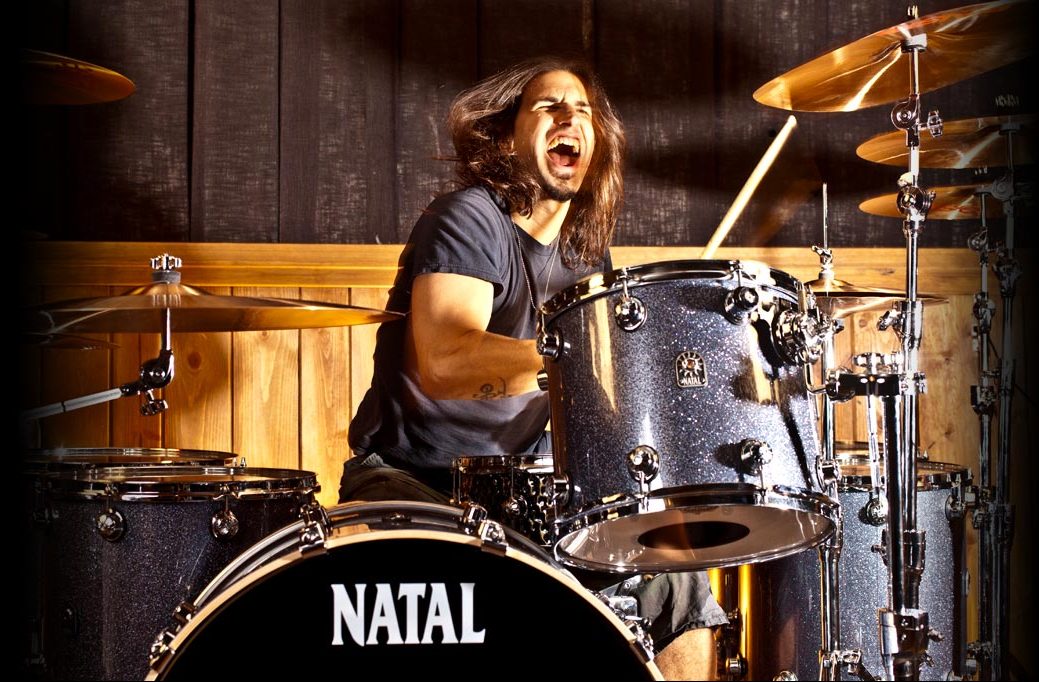
The drummer, guitarist, songwriter, and frontman opens up about his new music and the journey that brought Led by Vultures to life.
For Brian Tichy, music has always been about more than one instrument.
Tichy has spent decades behind the drum kit, performing and recording with some of the biggest names in rock. At the same time, he has always had a strong connection to guitar, songwriting, and singing. His latest project, Led by Vultures, gives him the opportunity to bring all of those parts of his musical life together.
“I wanna continue that for real. I wanna be the leader. I wanna write the songs. I wanna see things in my head come to life and become a full LP,” Tichy said during his conversation with Press Play.
Finding His Way to the Front
Tichy's interest in playing guitar and singing started long before Led by Vultures.
After moving to Los Angeles in the 1990s, he began working on his own songs and putting together jams with friends. He had a soundproofed Quonset hut near his home in the Hollywood Hills that became a place where he and other musicians could get together and play late into the night.
One of those musicians was Ray Luzier, who would later become known for his work with Korn. Tichy also remembers having musicians such as Eric Singer come by to jam.
The goal was always to play guitar.
Tichy eventually formed his own band, started playing clubs around Hollywood, and began working toward releasing his own music. He even secured a deal in Japan before eventually signing with Time Bomb Recordings in the United States. The record never ended up being released after the label lost its distribution.
Even though that project did not work out, the desire to write and perform his own music stayed with him.
Learning to Step Away From the Drum Kit
Taking on the role of guitarist and singer came with a different kind of pressure.
Tichy talked about the nerves that come with performing in a role you are not used to. His experience playing live eventually taught him that once you have done something enough times, the fear starts to become more manageable.
He compared it to riding a bike.
That experience became important when he started working seriously on Led by Vultures. He was also spending time studying Eddie Van Halen's playing and eventually put that work into practice by performing Van Halen songs live.
For Tichy, it was not about proving something to anyone else. He simply wanted to keep challenging himself as a musician.
The Influences Behind the Music
Tichy's influences cover a wide range of rock and metal.
When talking about his music, he mentioned artists and bands including Black Sabbath, Nirvana, Van Halen, and many others. He is particularly drawn to music that combines heavy sounds with strong melodies.
He pointed to Black Sabbath's "Symptoms of the Universe" as a song that made a major impression on him when he was younger. He also talked about Nirvana and the way the band could combine heavy guitars and noise with memorable melodies and choruses.
Those influences can be heard throughout Led by Vultures.
One example is "Below the Clouds of Jupiter." Tichy explained that the song started with a guitar riff that immediately caught his attention. He had been experimenting with different sounds and effects when the idea came together.
Once he heard it, he knew he wanted to keep working on it.
"I was like, okay, that's already sound with the flanger. The flanger. I was like, yeah, with a flanger, that's got a vibe," Tichy said.
Letting the Songs Take Shape
Tichy does not approach songwriting with one strict formula.
He talked about how a song does not always need a completely different chord progression for the chorus. Sometimes the strongest option is to keep the same basic progression and change the melody, guitar arrangement, or energy.
That approach played a role in "Below the Clouds of Jupiter." The basic musical foundation remains similar between the sections, but Tichy changes the guitar part and melody to give the chorus a different feeling.
For him, the most important thing is whether the idea works.
If it feels right, he follows it.
A Few Songs That Shaped Him
During the interview, Tichy also played Press Play's Song Story Game.
He talked about the music he listened to growing up, including Deep Purple, Metallica, Rush, and Dio. He also discussed some of the artists he has been listening to more recently.
One of those bands is Static X.
Tichy said he has been listening to the band heavily over the past few months and enjoys the intensity and production of their music. He also mentioned getting back into Crosby, Stills and Nash and exploring the extremely heavy sound of Primitive Man.
His listening habits show how broad his interests are. He can move from classic rock harmonies to some of the heaviest music he can find without being concerned about whether something fits into one particular genre.
He simply listens to what he likes.
Taking On "Lunatic Fringe"
One of the highlights of the new record is Tichy's cover of "Lunatic Fringe."
The song was originally featured in the 1980s movie Vision Quest. During the interview, Tichy explained that he wanted to keep the character of the original song while bringing his own sound to it.
He focused on making the drums heavier and giving the guitars a thicker sound. He also learned the guitar solo note for note.
The vocals presented another challenge.
Tichy talked about how difficult it can be to sing a song that was originally performed so effortlessly by another singer. Rather than completely changing the melody, he decided to stay close to the original phrasing and let his own voice carry the performance.
Keeping the Music Organic
One of the strongest themes throughout the conversation was Tichy's commitment to making the record himself.
He recorded the instruments, worked on the mixes, and spent time getting the sounds he wanted. He also talked about his obsession with getting the right snare sound.
As a drummer, Tichy pays close attention to how the instrument is played and recorded. He explained that hitting a snare too hard can actually hurt the tone and that getting the sound he wants starts with how he plays the instrument.
That same approach extends to his vocals.
Tichy said he does not use Auto Tune because he wants to be able to stand behind what he recorded.
"I've gotta prove I could do this," he said.
For Tichy, the imperfections are part of what makes the recording his.
"If somebody might not care for this music or this record or whatever, and that's fine. But at least I can say that's me and that's how I do things."
Finally Making the Record
Led by Vultures is also a collection of ideas that Tichy has carried with him for years.
Some of the songs were written recently, while others had been sitting on hard drives for a long time. When he started working on the record, he originally planned to use mostly new material. Eventually, he realized some of those older songs still had something worth bringing back.
Keyboardist Derek Sherinian also played an important role in encouraging Tichy to make the record. Sherinian pushed him to stop waiting and create the body of work he had been talking about for years.
That encouragement helped Tichy finally take the next step.
Led by Vultures brings together his experience as a drummer, his love of guitar, his songwriting, and his interest in recording and production. It is a project that allows him to take control of the entire process and create music that sounds like him.
After decades of playing music, Tichy is finally putting his own songs at the center.
And for him, that may be the most important part of the entire record.