Bandana Cheyenna Isn’t Asking for Permission—She’s Taking the Mic
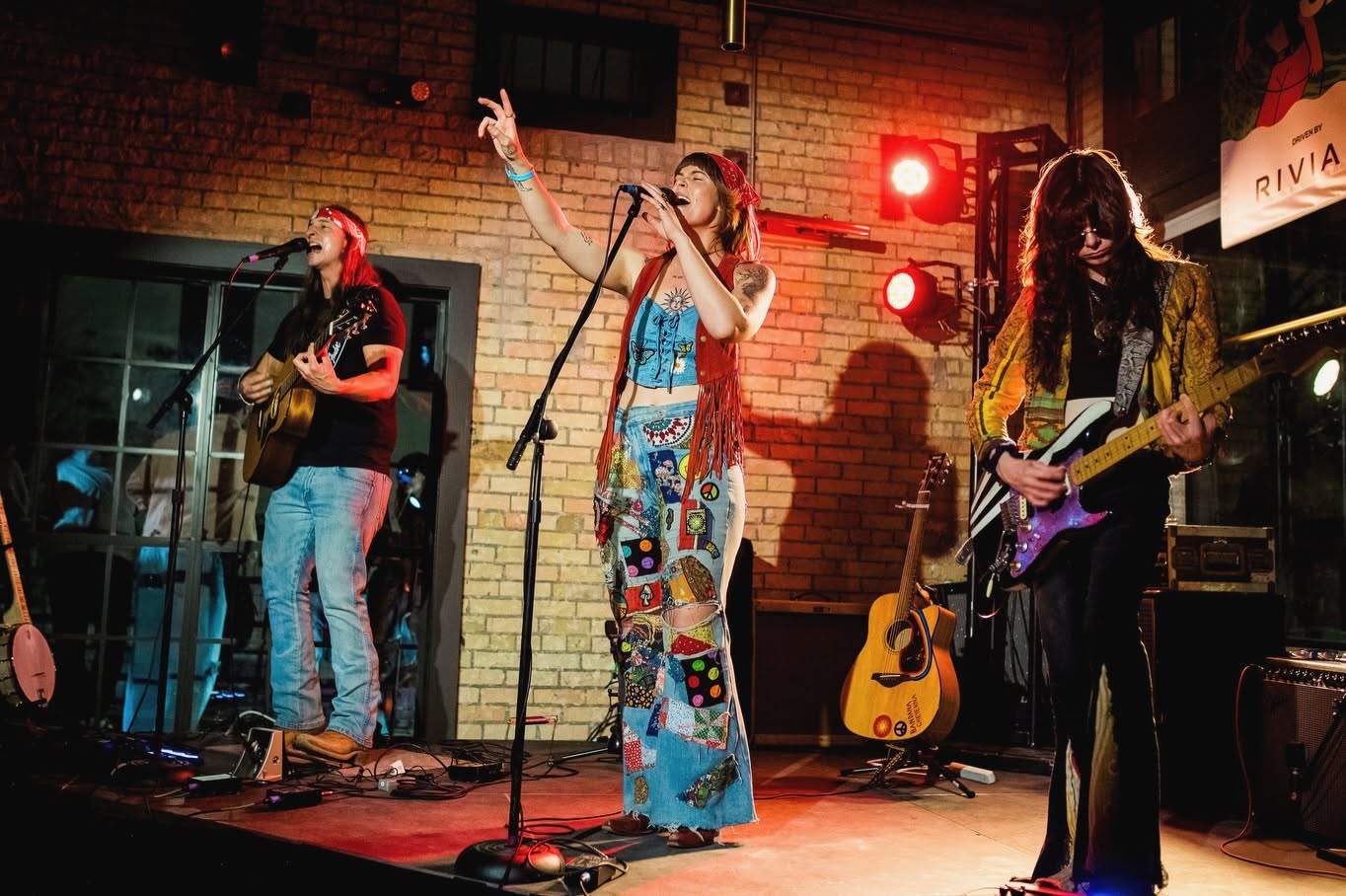
Some artists arrive in Nashville with a five-year plan. Others arrive with a guitar, a dream, and just enough stubbornness to keep going when nobody is listening. Bandana Cheyenna somehow managed to bring both.
Long before her songs were climbing charts, winning awards, and finding homes with rising country stars, she was a little girl in suburban Ohio sitting around campfires with her father, absorbing the poetry of songwriters like Dan Fogelberg and Kenny Loggins. In a household where Christian radio dominated the airwaves, those folk storytellers became her first glimpse into the power of a lyric. She didn't know it then, but the seeds of her future career were already being planted.
Cheyenna laughs when people ask if Bandana Cheyenna is her real name. It isn't. The nickname was born after she shaved her head, started wearing bandanas, and adopted the Instagram handle that eventually evolved into an artist identity. Like many things in her career, it wasn't carefully manufactured. It simply happened because it felt authentic.
Authenticity is a word that gets tossed around so often in music that it risks losing meaning. But in Cheyenna's case, it's impossible to ignore. Whether she's talking about growing up in Ohio, struggling through early songwriting sessions, or preparing for her first tour, there's an unmistakable honesty that threads through everything she creates.
That honesty has become one of her greatest strengths as a songwriter.
When most people hear Dasha's breakout smash "Austin," they hear a catchy country anthem built around one of the most memorable hooks in recent memory. Songwriters hear something else entirely: craftsmanship. The song's central question—"Did your boots stop workin'?"—isn't just clever. It's a masterclass in using imagery to tell a story without ever spelling it out.
Ironically, the song nearly never happened.
The writing session began with an entirely different idea that wasn't connecting. Frustration was setting in. Then guitarist Adam Wendler began casually playing a pattern inspired by Dolly Parton's "Jolene." Suddenly the room woke up. Dasha sang the opening line almost instinctively, and the entire song seemed to reveal itself at once.
"It felt like one of those songs that was already floating in the ether," Cheyenna recalled.
That description reveals something important about how she views songwriting. For her, songs aren't manufactured products. They're discoveries. The songwriter's job isn't to force them into existence but to recognize them when they arrive.
The same creative spark would later help fuel another fan favorite, Alexandra Kay's "Cupid's a Cowgirl." That song also emerged after its writers abandoned a less inspiring idea and simply started talking. The title surfaced naturally during conversation, and everyone in the room immediately knew they had found something worth chasing.
It's a pattern Cheyenna returns to repeatedly: when the pressure disappears, the magic shows up.
But while major-label cuts and chart success have elevated her profile as a songwriter, her solo material reveals something even deeper.
Take "God and the Crickets."
The title alone sounds like something pulled from a forgotten notebook sitting beside a cabin porch. Originally written during a session for another artist, the song eventually found its way back home to Cheyenna because, in many ways, it was always her story.
It's the story of every dreamer who leaves home chasing something uncertain. Every artist who performs for empty rooms. Every songwriter who keeps believing despite having little evidence that success is around the corner.
The song captures a reality rarely discussed in an industry obsessed with overnight success. Most careers are built in obscurity. Long before the awards, before the streams, before the headlines, there are countless nights where the audience is measured in single digits.
And yet those nights matter.
Perhaps that's why "God and the Crickets" resonates so deeply. It's not just a song about perseverance. It's a reminder that the journey itself has value, even when nobody appears to be watching.
Listening to Cheyenna perform it, you can hear the influence of those early campfire songs. Her voice doesn't overpower. It invites. There's a softness to her delivery that stands apart from many contemporary country artists. Rather than competing for volume, she leans into intimacy.
That choice requires confidence.
For years, she questioned whether a gentler vocal style could survive in a genre often dominated by bigger, louder performances. Eventually she realized the very thing that made her different was also what made her memorable.
That realization seems to have shaped her broader artistic philosophy.
Cheyenna often describes herself as "genre-free" and "gender-free," not in a provocative sense but in a deeply human one. Her belief is simple: emotions don't belong to categories. Heartbreak isn't country. Hope isn't pop. Loneliness isn't male or female.
A great song transcends labels because it speaks directly to the listener's experience.
That perspective feels increasingly relevant in a world determined to sort everything into boxes. Cheyenna's music quietly resists those boundaries. Instead of telling listeners what they should hear, she creates space for them to discover what they feel.
Perhaps that's why artists like Stevie Nicks continue to inspire her. Nicks never simply wrote songs. She created emotional landscapes. A listener could walk into them carrying their own story and leave feeling understood.
Cheyenna's best work operates in much the same way.
And while winning the 2024 People's Choice Country Award for Female Song of the Year certainly represents a milestone, it feels less like the destination and more like a confirmation that she's moving in the right direction.
Because beneath the awards, the hits, and the growing recognition remains the same girl who grew up singing around campfires in Ohio.
The same songwriter who believes songs arrive when you stop forcing them.
The same artist preparing for a tour where some rooms may still be small and some crowds may still be sparse.
Only now, she understands something every great songwriter eventually learns.
Sometimes you play for thousands.
Sometimes you play for ten.
Sometimes you play for God and the crickets.
And if the song is good enough, that's more than enough.